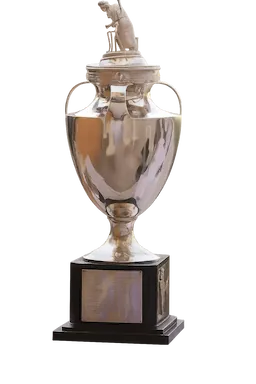
Ranji Trophy
The Ranji Trophy is India’s premier first‑class cricket tournament, running since 1935 and featuring 38 teams from across the country. As the backbone of domestic cricket, it has produced some of India’s finest cricketers and remains the stage where future stars first make their mark. Over the decades, the competition has grown into a true reflection of India’s cricketing depth, with intense Elite‑group battles and a rising Plate division that continues to shape new contenders.
The 2025-2026 edition of the Ranji Trophy, played from 15 October 2025 to 28 February 2026, delivered one of the most memorable chapters in the tournament’s long history. Jammu & Kashmir clinched their maiden Elite title after a dramatic final against Karnataka at the KSCA Stadium in Hubli, where the match ended in a draw but J&K lifted the trophy on the strength of a commanding first‑innings lead. Their historic run, built on resilience and standout performances, marked a defining moment for cricket in the region.
Earlier, in the Plate division, Bihar emerged as champions, continuing the growing competitiveness of the lower tier and earning well‑deserved recognition for their campaign. With fresh champions, rising teams, and a legacy that continues to evolve, the Ranji Trophy remains the heartbeat of Indian domestic cricket, where tradition meets opportunity, and every season writes a new story.










Introduction
The Ranji Trophy stands at the heart of India’s red-ball cricket culture, a first-class championship that has shaped generations of players since its launch in 1934-1935. Named after Kumar Shri Ranjitsinhji, the first Indian to play international cricket, the tournament grew alongside the rise of organized cricket in the country, especially after the BCCI’s formation in 1928. Its early zonal structure reflected India’s vast geography, with teams grouped into North, South, East, West and later Central zones, before evolving into the multi-tier system used today. Across eras, the competition has remained a reliable measure of domestic strength, producing countless cricketers who later became pillars of the national Test side. Mumbai’s unmatched dominance, including a run of 15 straight titles from 1958-1959 to 1972-1973, remains one of the most iconic chapters in Indian cricket history.
Beyond its cricketing legacy, the Ranji Trophy has long mirrored India’s sporting ecosystem. The tournament’s expansion to 38 teams highlights how cricket has penetrated every corner of the country, from major metros to smaller centres that now host high-quality first-class fixtures. Its role in talent development is deeply institutionalized, with age-group pathways feeding into state squads and performances directly influencing national selection. The annual Irani Cup, played between the Ranji champions and the Rest of India, further reinforces the championship’s prestige and acts as an important fixture in the domestic season. Over time, improvements in scheduling, broadcast reach and player remuneration have strengthened the competition’s relevance, ensuring that first-class cricket continues to thrive even in an era dominated by limited-overs formats.
For readers who want an even richer perspective, IndiaBetMaster.com also offers a full version of this article in Hindi (रणजी ट्रॉफी हिंदी समीक्षा), giving fans an easy way to explore cultural angles, historical milestones and state-team narratives in a language that adds a familiar flavour to the subject. This bilingual approach helps readers connect more deeply with the tournament’s heritage while keeping the information accessible and engaging.
As you move through the full guide, you’ll find detailed sections on format evolution, standout teams, structural changes, and the broader cricketing context that has shaped the Ranji Trophy across decades. Whether you follow domestic cricket closely or simply enjoy understanding how India’s cricketing backbone operates, this introduction sets the stage for a comprehensive dive into one of the sport’s most enduring institutions.
Best Online Betting Sites in India - October 2026







































Current Season
The Ranji Trophy 2026-2027 season is set to begin on 11 October 2026 and run until 3 March 2027, marking the return of India’s most storied red-ball competition in a packed domestic calendar. The Elite division remains the centrepiece, featuring 32 teams split across four groups, while the Plate division continues with six teams. The season will once again follow the established two-phase structure, with Phase 1 running from 11 October to 5 November and Phase 2 resuming from 17 January to 4 February, before the knockouts take over from 9 February to 3 March. This staggered format, designed to accommodate the Syed Mushtaq Ali Trophy and Vijay Hazare Trophy in between, has become a familiar rhythm for players and fans, and it continues unchanged for 2026-2027.
One of the biggest structural continuities is the single-team promotion and relegation system between the Elite and Plate groups. Introduced recently and retained for this season, it keeps the stakes high for both divisions. The Plate league will complete its second phase by 20 January, with its final scheduled from 24 to 28 January. This clear separation of timelines ensures that Plate teams get their own spotlight before the Elite knockouts begin. The BCCI has not announced any major format overhauls for 2026-2027, but the broader domestic calendar does include notable changes such as the conversion of certain U23 and university tournaments from one-day to T20 formats, reflecting a shift in India’s developmental pathway. While these changes do not directly alter the Ranji Trophy, they influence the talent pipeline feeding into it.
The venue list for the season spans traditional Ranji hubs and emerging centres across the country, with multiple grounds hosting Elite and Plate fixtures. The BCCI’s published venue roster confirms a wide spread of host cities, ensuring that fans across regions get a share of long-format cricket. Although individual match allocations vary, the mix of historic stadiums and newer facilities promises a blend of nostalgia and modern viewing comfort. Many state associations have upgraded outfield quality and player facilities over the past two years, and this season is expected to benefit from those improvements. These upgrades also add interest for cricket followers, as pitch conditions and venue characteristics often influence how teams approach different matches.
Crowd expectations for 2026-2027 are optimistic, especially after the steady rise in attendance seen in recent seasons. The Elite phase traditionally draws strong weekend turnouts in cities like Mumbai, Bengaluru, Chennai, Kolkata, and Indore. Digital viewership is likely to remain the primary driver of reach, with streaming platforms continuing to carry the bulk of the broadcast load. Ranji Trophy has consistently been available on major Indian sports networks and their digital apps in recent years. Based on past patterns, fans can expect continued access to live streams, scorecards, and ball-by-ball coverage, which help followers stay connected throughout the season.
The Ranji Trophy remains one of the strongest domestic red-ball competitions in the world. The BCCI’s match-fee structure, which was revised in recent seasons, continues to offer senior players up to ₹60,000 per day and younger professionals between ₹40,000 and ₹50,000 per day. Prize money for the champions and runners-up has not been updated in the 2026-2027 schedule release, but unless revised later, it is expected to remain in the same bracket as recent editions, where winners received ₹5 crore and runners-up earned ₹3 crore. This financial stability keeps the tournament attractive for players and highlights the importance of sustained performances across a long domestic season.
With the season stretching from October to March, the Ranji Trophy 2026-2027 promises another intense, narrative-rich journey through India’s domestic cricket landscape. The Elite league will once again be the battleground for established powerhouses and rising challengers, while the Plate division offers its own storyline of ambition and upward mobility. For fans, the combination of a stable format, a deep talent pool, and a long multi-city schedule sets the stage for a compelling season where form, conditions, and squad depth will shape every match outcome.
Ongoing October 2026 Events
 |
ICC World Test Championship (WTC) Test | June 17, 2025 – June 13, 2027 | LIVE |
|
ICC Women's Championship ODI | February 20, 2026 – April 15, 2029 | LIVE |
 |
Minor League Cricket (MiLC) T20 | September 17, 2026 – October 25, 2026 | LIVE |
|
Cricket at the Asian Games T20I | September 17, 2026 – October 3, 2026 | |
  |
South Africa vs Australia Tour | September 24, 2026 – October 31, 2026 | LIVE |
 |
Col CK Nayudu Winners vs ROI FC | October 1–4, 2026 | |
|
Irani Cup FC | October 1–5, 2026 | |
 |
National Cricket League (NCL) FC | October 3, 2026 – November 17, 2026 | LIVE |
|
Vinoo Mankad Trophy List A | October 8–27, 2026 | LIVE |
  |
Sri Lanka vs Pakistan Tour | October 9, 2026 – November 21, 2026 | LIVE |
|
Women's U19 T20 Trophy T20 | October 9–26, 2026 | LIVE |
|
Ranji Trophy FC | October 11, 2026 – March 3, 2027 | LIVE |
|
Col CK Nayudu Trophy Multi-Day | October 12, 2026 – March 1, 2027 | LIVE |
 |
India vs New Zealand Tour | October 22, 2026 – December 1, 2026 | |
 |
Nepal Premier League (NPL) T20 | October 26, 2026 – November 21, 2026 | |
|
Senior Women's T20 Trophy T20 | October 26, 2026 – November 20, 2026 | |
 |
Bangladesh vs West Indies Test | October 28, 2026 – November 9, 2026 | |
|
Women's Big Bash League (WBBL) T20 | October 29, 2026 – December 5, 2026 | |
|
Women's U19 T20 Challenger Trophy T20 | October 30, 2026 – November 5, 2026 |
Ongoing October 2026 Events
|
ICC World Test Championship (WTC) Test | June 17, 2025 – June 13, 2027 | LIVE |
|
ICC Women's Championship ODI | February 20, 2026 – April 15, 2029 | LIVE |
|
Minor League Cricket (MiLC) T20 | September 17, 2026 – October 25, 2026 | LIVE |
|
Cricket at the Asian Games T20I | September 17, 2026 – October 3, 2026 | |
|
South Africa vs Australia Tour | September 24, 2026 – October 31, 2026 | LIVE |
|
Col CK Nayudu Winners vs ROI FC | October 1–4, 2026 | |
|
Irani Cup FC | October 1–5, 2026 | |
|
National Cricket League (NCL) FC | October 3, 2026 – November 17, 2026 | LIVE |
|
Vinoo Mankad Trophy List A | October 8–27, 2026 | LIVE |
|
Sri Lanka vs Pakistan Tour | October 9, 2026 – November 21, 2026 | LIVE |
|
Women's U19 T20 Trophy T20 | October 9–26, 2026 | LIVE |
|
Ranji Trophy FC | October 11, 2026 – March 3, 2027 | LIVE |
|
Col CK Nayudu Trophy Multi-Day | October 12, 2026 – March 1, 2027 | LIVE |
|
India vs New Zealand Tour | October 22, 2026 – December 1, 2026 | |
|
Nepal Premier League (NPL) T20 | October 26, 2026 – November 21, 2026 | |
|
Senior Women's T20 Trophy T20 | October 26, 2026 – November 20, 2026 | |
|
Bangladesh vs West Indies Test | October 28, 2026 – November 9, 2026 | |
|
Women's Big Bash League (WBBL) T20 | October 29, 2026 – December 5, 2026 | |
|
Women's U19 T20 Challenger Trophy T20 | October 30, 2026 – November 5, 2026 |

Previous Seasons
Past Ranji Trophy Editions
- 2025-2026 Season
The Ranji Trophy season of 2025-2026, played from 15 October 2025 to 28 February 2026, will be remembered as a landmark edition in Indian domestic cricket. Jammu & Kashmir lifted their maiden Elite title, defeating Karnataka on first-innings lead in a drawn final at the KSCA Stadium, Hubli. J&K’s massive 291-run first-innings advantage proved decisive, capping a dream campaign that saw them rise from underdogs to national champions. The Plate division also produced a strong storyline, with Bihar clinching the Plate title, continuing the steady rise of teams outside the traditional power bracket.
The tournament retained its familiar structure of 38 teams split across four Elite groups and one Plate group, with the updated single-team promotion and relegation rule adding sharper stakes to both tiers. The knockout stages once again featured the Decision Review System, improving accuracy in high-pressure moments and offering deeper insights for fans following Ranji Trophy team performances and season trends.
- 2024-2025 Season
The Ranji Trophy season of 2024-2025 was a memorable one, and Vidarbha won its third title. Vidarbha won the title by taking a first-innings lead against Kerala in a very close final held at the Vidarbha Cricket Association Ground in Nagpur. The match, which ended in a high-scoring draw, showed how competitive both teams were, but Vidarbha's stronger first innings performance made them the winners. Fans and experts in cricket were impressed by several players' performances during the season. Harsh Dubey of Vidarbha, who was among the leading wicket-takers during the season, and Sachin Baby of Kerala, who hit an important 98 in the final, were two of the standout performers. The event once again highlighted the depth of talent across Indian domestic cricket.
38 teams competed in the 2024-2025 season, with four "Elite" groups and one "Plate" group making up the tournament structure. The system was designed to maintain a competitive balance, with teams in the Elite groups competing for knockout places and teams in the Plate group aiming for promotion. The updated promotion and relegation structure continued to shape the competition between the two tiers. Adding technologies like the Decision Review System (DRS) to the knockout stages has also been a big plus. These systems have made the most important games of the season more accurate and helped provide clearer decisions during key moments.
The previous season had a huge effect on everything else. The media paid a lot of attention to the final between Vidarbha and Kerala, showing that the event can create interesting stories about teams outside the traditional big names. It was clear that the Ranji Trophy is an important part of Indian cricket because of the fierce competition and high-quality cricket that was played. Increasing the tournament's popularity has also been helped by the BCCI's marketing and financial efforts, such as title sponsorship deals. The Ranji Trophy's success shows that even though franchise cricket, like the IPL, has a huge following around the world, the four-day domestic game remains an important part of Indian cricket. It continues to be a platform where the next generation of players for the national team develops.
- Earlier Seasons
The Ranji Trophy, India's main first-class cricket tournament, was in its 89th season in 2023-2024. It happened between January 5, 2024, and March 14, 2024. The defending champions, Saurashtra, had previously won their second Ranji Trophy title.
The teams were separated into two divisions: the Elite category, which consisted of 32 teams divided into four groups, and the Plate category, which had six teams. The top two teams from each group advanced to the quarterfinals, and the Elite group teams faced off once. Teams played each other once in the Plate Group, but the top four teams advanced to the Plate Group knockout stages, while the lowest two teams competed for the fifth and sixth spots. A separate playoff was held for the third and fourth spots. The bottom two teams from all four Elite groups combined, taking into account both points and the quotient, were demoted to the Plate group, while the two Plate finalists were promoted to the Elite group for the upcoming season, 2024-2025.
After playing knockout stage matches and quarterfinals, four teams qualified for the semi-finals which were Vidarbha, Madhya Pradesh, Tamil Nadu, and Mumbai. The first semi-final took place from 2-6 March at Vidarbha Cricket Association Ground, Nagpur between Vidarbha and Madhya Pradesh. Vidarbha won by 62 runs in the end and advanced to the final of the Ranji Trophy. The second semi-final also took place from 2-6 March at Bandra Kurla Complex Ground, Mumbai between Mumbai and Tamil Nadu. Mumbai won by an innings and 70 runs in the end and advanced to the final of the Ranji Trophy.
The Ranji Trophy 2023-2024 final, held from March 10-14, 2024, at Wankhede Stadium, saw Mumbai triumph over Vidarbha by 169 runs. Mumbai, batting first, scored 224 runs, with Shardul Thakur contributing 75. Vidarbha struggled in response, managing only 105, with Tanush Kotian taking 3/7 for Mumbai. In their second innings, Mumbai posted a strong 418, led by Musheer Khan's 136, while Vidarbha's Harsh Dubey took 5/144. Chasing a steep target, Vidarbha was bowled out for 368, despite Akshay Wadkar's 102. Musheer Khan was named Man of the Match for his crucial innings.
| Season | Champion | Runner-up | Final Result | Event / Final Location |
|---|---|---|---|---|
| 2025-2026 | Jammu and Kashmir | Karnataka | Jammu and Kashmir won by 5 wickets | D. R. Bendre Cricket Stadium Hubli |
| 2024-2025 | Vidarbha | Kerala | Vidarbha won by 6 wickets | Vidarbha Cricket Association Stadium, Nagpur |
| 2023-2024 | Mumbai | Vidarbha | Mumbai won by 7 wickets | Wankhede Stadium, Mumbai |
| 2022-2023 | Saurashtra | Bengal | Saurashtra won by 4 wickets | Eden Gardens, Kolkata |
| 2021-2022 | Madhya Pradesh | Mumbai | Madhya Pradesh won by 31 runs | M. Chinnaswamy Stadium, Bengaluru |
| 2019-2020 | Saurashtra | Bengal | Saurashtra won by 10 wickets | Niranjan Shah Stadium, Rajkot |
| 2018-2019 | Vidarbha | Saurashtra | Vidarbha won by 78 runs | Vidarbha Cricket Association Stadium, Nagpur |
| 2017-2018 | Vidarbha | Delhi | Vidarbha won by 6 wickets | Holkar Cricket Stadium, Indore |
| 2016-2017 | Gujarat | Mumbai | Gujarat won by 5 wickets | Holkar Cricket Stadium, Indore |
| 2015-2016 | Mumbai | Saurashtra | Mumbai won by 5 wickets | Maharashtra Cricket Association Stadium Pune |
| 2014-2015 | Karnataka | Tamil Nadu | Karnataka won by 8 wickets | Wankhede Stadium, Mumbai |
| 2013-2014 | Karnataka | Maharashtra | Karnataka won by 6 wickets | Rajiv Gandhi International Cricket Stadium, Hyderabad |
| 2012-2013 | Mumbai | Saurashtra | Mumbai won by 7 wickets | Wankhede Stadium, Mumbai |
| 2011-2012 | Rajasthan | Tamil Nadu | Rajasthan won by 5 wickets | M. A. Chidambaram Stadium, Chennai |
| 2010-2011 | Rajasthan | Baroda | Rajasthan won by 3 wickets | Moti Bagh Stadium, Vadodara |
| 2009-2010 | Mumbai | Karnataka | Mumbai won by 6 wickets | Gangotri Glades Stadium Mysore |
| 2008-2009 | Mumbai | Uttar Pradesh | Mumbai won by 12 runs | Rajiv Gandhi International Cricket Stadium, Hyderabad |
| 2007-2008 | Delhi | Uttar Pradesh | Delhi won by 9 wickets | Wankhede Stadium, Mumbai |
| 2006-2007 | Mumbai | Bengal | Mumbai won by 141 runs | Wankhede Stadium, Mumbai |
| 2005-2006 | Uttar Pradesh | Bengal | Uttar Pradesh won by 78 runs | K. D. Singh Babu Stadium Lucknow |
| 2004-2005 | Railways | Punjab | Railways won by 5 wickets | I. S. Bindra Stadium, Mohali |
| 2003-2004 | Mumbai | Tamil Nadu | Mumbai won by 7 wickets | M. A. Chidambaram Stadium, Chennai |
| 2002-2003 | Mumbai | Tamil Nadu | Mumbai won by 9 wickets | Wankhede Stadium, Mumbai |
| 2001-2002 | Railways | Baroda | Railways won by 4 wickets | Karnail Singh Stadium, Delhi |
| 2000-2001 | Baroda | Railways | Baroda won by 6 wickets | Moti Bagh Stadium, Vadodara |
| 1999-2000 | Mumbai | Hyderabad | Mumbai won by 79 runs | Wankhede Stadium, Mumbai |
| 1998-1999 | Karnataka | Madhya Pradesh | Karnataka won by 8 wickets | M. Chinnaswamy Stadium, Bengaluru |
| 1997-1998 | Karnataka | Uttar Pradesh | Karnataka won by 4 wickets | * Not documented |
| 1996-1997 | Mumbai | Delhi | Mumbai won by an innings and 118 runs | * Not documented |
| 1995-1996 | Karnataka | Tamil Nadu | Karnataka won by 8 wickets | * Not documented |
| 1994-1995 | Mumbai | Punjab | Mumbai won by an innings and 126 runs | * Not documented |
| 1993-1994 | Mumbai | Bengal | Mumbai won by an innings and 119 runs | * Not documented |
| 1992-1993 | Punjab | Maharashtra | Punjab won by an innings and 324 runs | * Not documented |
| 1991-1992 | Delhi | Tamil Nadu | Delhi won by 8 wickets | * Not documented |
| 1990-1991 | Haryana | Mumbai | Haryana won by 2 runs | * Not documented |
| 1989-1990 | Bengal | Delhi | Bengal won by 6 wickets | * Not documented |
| 1988-1989 | Delhi | Bengal | Delhi won by 7 wickets | * Not documented |
| 1987-1988 | Tamil Nadu | Railways | Tamil Nadu won by an innings and 144 runs | * Not documented |
| 1986-1987 | Hyderabad | Delhi | Hyderabad won by an innings and 141 runs | * Not documented |
| 1985-1986 | Delhi | Haryana | Delhi won by an innings and 19 runs | * Not documented |
| 1984-1985 | Mumbai | Delhi | Mumbai won by 90 runs | * Not documented |
| 1983-1984 | Mumbai | Delhi | Mumbai won by 8 wickets | * Not documented |
| 1982-1983 | Karnataka | Mumbai | Karnataka won by an innings and 27 runs | * Not documented |
| 1981-1982 | Delhi | Karnataka | Delhi won by 7 wickets | Arun Jaitley Cricket Stadium, Delhi |
| 1980-1981 | Mumbai | Delhi | Mumbai won by 138 runs | Wankhede Stadium, Mumbai |
| 1979-1980 | Delhi | Mumbai | Delhi won by 90 runs | Arun Jaitley Cricket Stadium, Delhi |
| 1978-1979 | Delhi | Karnataka | Delhi won by 6 wickets | M. Chinnaswamy Stadium, Bengaluru |
| 1977-1978 | Karnataka | Uttar Pradesh | Karnataka won by an innings and 27 runs | Mohan Meakins Cricket Stadium Ghaziabad |
| 1976-1977 | Mumbai | Delhi | Mumbai won by 6 wickets | Arun Jaitley Cricket Stadium, Delhi |
| 1975-1976 | Mumbai | Bihar | Mumbai won by an innings and 132 runs | Keenan Stadium Jamshedpur |
| 1974-1975 | Mumbai | Karnataka | Mumbai won by 6 wickets | Wankhede Stadium, Mumbai |
| 1973-1974 | Karnataka | Rajasthan | Karnataka won by 41 runs | Sawai Mansingh Stadium, Jaipur |
| 1972-1973 | Mumbai | Tamil Nadu | Mumbai won by 6 wickets | M. A. Chidambaram Stadium, Chennai |
| 1971-1972 | Mumbai | Bengal | Mumbai won by 1 wicket | Brabourne Stadium, Mumbai |
| 1970-1971 | Mumbai | Maharashtra | Mumbai won by an innings and 23 runs | Brabourne Stadium, Mumbai |
| 1969-1970 | Mumbai | Rajasthan | Mumbai won by 6 wickets | * Not documented |
| 1968-1969 | Mumbai | Bengal | Mumbai won by 10 wickets | * Not documented |
| 1967-1968 | Mumbai | Tamil Nadu | Mumbai won by an innings and 71 runs | * Not documented |
| 1966-1967 | Mumbai | Rajasthan | Mumbai won by 184 runs | * Not documented |
| 1965-1966 | Mumbai | Rajasthan | Mumbai won by an innings and 54 runs | * Not documented |
| 1964-1965 | Mumbai | Hyderabad | Mumbai won by an innings and 16 runs | * Not documented |
| 1963-1964 | Mumbai | Rajasthan | Mumbai won by 7 wickets | * Not documented |
| 1962-1963 | Mumbai | Rajasthan | Mumbai won on first innings lead | * Not documented |
| 1961-1962 | Mumbai | Rajasthan | Mumbai won by 9 wickets | Brabourne Stadium, Mumbai |
| 1960-1961 | Mumbai | Rajasthan | Mumbai won by 1 wicket | * Not documented |
| 1959-1960 | Mumbai | Karnataka | Mumbai won by 10 wickets | * Not documented |
| 1958-1959 | Mumbai | Bengal | Mumbai won by 8 wickets | Brabourne Stadium, Mumbai |
| 1957-1958 | Baroda | Services | Baroda won by an innings and 51 runs | Moti Bagh Stadium, Vadodara |
| 1956-1957 | Mumbai | Services | Mumbai won by an innings and 38 runs | Roshanara Club Ground Delhi |
| 1955-1956 | Mumbai | Bengal | Mumbai won by 208 runs | Eden Gardens, Kolkata |
| 1954-1955 | Tamil Nadu | Holkar | Tamil Nadu won by 4 wickets | Yeshwant Club Ground Indore |
| 1953-1954 | Mumbai | Holkar | Mumbai won by 7 wickets | Yeshwant Club Ground Indore |
| 1952-1953 | Holkar | Bengal | Holkar won by 201 runs | Eden Gardens, Kolkata |
| 1951-1952 | Mumbai | Holkar | Mumbai won by 4 wickets | Brabourne Stadium, Mumbai |
| 1950-1951 | Holkar | Gujarat | Holkar won by 128 runs | Yeshwant Club Ground Indore |
| 1949-1950 | Baroda | Holkar | Baroda won by 3 wickets | Maharaja Pratapsingh Coronation Gymkhana Ground Vadodara |
| 1948-1949 | Mumbai | Baroda | Mumbai won by 10 wickets | Brabourne Stadium, Mumbai |
| 1947-1948 | Holkar | Mumbai | Holkar won by 4 wickets | Yeshwant Club Ground Indore |
| 1946-1947 | Baroda | Holkar | Baroda won by 6 wickets | Central College Ground Vadodara |
| 1945-1946 | Holkar | Baroda | Holkar won by 3 wickets | Yeshwant Club Ground Indore |
| 1944-1945 | Mumbai | Holkar | Mumbai won by 94 runs | Brabourne Stadium, Mumbai |
| 1943-1944 | Western India | Bengal | Western India won by 94 runs | Brabourne Stadium, Mumbai |
| 1942-1943 | Baroda | Hyderabad | Baroda won by 7 wickets | Railway Recreation Club Ground Secunderabad |
| 1941-1942 | Mumbai | Karnataka | Mumbai won by 8 wickets | Brabourne Stadium, Mumbai |
| 1940-1941 | Maharashtra | Tamil Nadu | Maharashtra won by 6 wickets | M. A. Chidambaram Stadium, Chennai |
| 1939-1940 | Maharashtra | Uttar Pradesh | Maharashtra won by 109 runs | Poona Gymkhana Ground Pune |
| 1938-1939 | Bengal | Southern Punjab | Bengal won by 8 wickets | Eden Gardens, Kolkata |
| 1937-1938 | Hyderabad | Nawanagar | Hyderabad won by 4 wickets | Brabourne Stadium, Mumbai |
| 1936-1937 | Nawanagar | Bengal | Nawanagar won by 78 runs | Bombay Gymkhana Mumbai |
| 1935-1936 | Mumbai | Tamil Nadu | Mumbai won by 9 wickets | Arun Jaitley Cricket Stadium, Delhi |
| 1934-1935 | Mumbai | Northern India | Mumbai won by 39 runs | Bombay Gymkhana Mumbai |
* Separate Elite and Plate tournaments format introduced during 2022-2023 season
** 2020-2021 season was canceled due to covid-19
History and Structure
The Ranji Trophy is named for Ranjitsinhji, the legendary cricketer from India who represented England in international cricket. He represented Sussex in county cricket and played first-class cricket for Cambridge University in England. Known for his elegant batting style, he is regarded as one of the most influential batters in cricket history. The competition's trophy, which was established in 1934, was presented in his honor. The Bombay (now Mumbai) squad won the inaugural championship. Mumbai has since become the most successful team in the tournament's history and remains one of the most respected sides in Indian domestic cricket.
The tournament's structure has changed over the years due to the evolving nature of domestic cricket and the challenges of managing a large competition. From the tournament's inception until the turn of the millennium, the zonal system was used in the initial phase of the trophy because it provided a practical structure. The first four zones were the North, South, East, and West zones, while the Central zone was introduced for the 1952-1953 season. The first stage was initially contested as a knockout competition before being changed to a round-robin format followed by knockout stages in the middle of the 1950s.
During the 2002-2003 season, the zonal system was eliminated, and the format was changed to a two-division structure with groups for the Elite and Plate categories. Since then, several adjustments have been made, including a major change for the 2018-2019 season that increased the number of participating teams from 29 to 38. This made the Ranji Trophy one of the largest domestic first-class competitions in terms of participating teams and match schedule. The tournament remains a major part of India's cricket calendar, featuring established domestic teams and emerging talent.
Despite the changes, the tournament's basic format remained similar, with the first round played as a league stage followed by knockout matches. Teams are divided into groups, with sides competing against each other before the leading teams progress to the next stage. The knockout phase includes quarterfinals, semifinals, and the final, where teams compete for the prestigious Ranji Trophy title.
The competition is categorized as a top first-class cricket event, which is the highest grade for cricket matches played over three or more days, whether at international or domestic level. The tournament format involves multiple groups where teams compete in a round-robin structure. The strongest teams from each group advance to the knockout stage, which includes quarterfinals, semifinals, and the championship match.
The Ranji Trophy features a long multi-day schedule divided between the league stage and the knockout rounds, making it one of the most important events in India's domestic cricket season. The tournament provides a platform for experienced players and emerging cricketers to compete at the highest domestic level. The Irani Cup, a multi-day first-class match that traditionally features the Ranji Trophy winner, follows the domestic season and adds another important chapter to India's cricket calendar.
A.S. De Mello, the founder of the BCCI, suggested the creation of a first-class tournament at the national level. Following the BCCI conference in Shimla in July 1934, the Ranji Trophy was officially created, with the first matches taking place in the 1934-1935 season. The competition was originally called "The Cricket Championship of India" before being renamed. Bhupinder Singh, the Maharaja of Patiala, presented the trophy in honor of Kumar Shri Ranjitsinhji, Jam Sahib of Nawanagar, who had passed away the previous year. Madras and Mysore played in the competition's opening match on November 4 at the Chepauk ground in Madras (now Chennai). Mumbai (Bombay) has been the tournament's most successful team, including a dominant period with 15 consecutive titles from 1958-1959 to 1972-1973.
Up to 2001, the teams were divided into the North, West, East, South, and Central zones. In preparation for the 1952-1953 season, the Central zone was added. Before the 2002-2003 season, a two-division structure with the Elite Group and Plate Group replaced the zonal system. Teams were divided between the two groups based on the competition structure at the time.
Mumbai has dominated the Ranji Trophy historically, winning the championship more times than any other team. The side also holds the record for the most final appearances in the tournament's history. During the period from the 1953-1954 season through the 1972-1973 season, Mumbai produced one of the most remarkable runs in domestic cricket, winning the championship 18 times in 20 seasons. Only Madras and Baroda were able to interrupt Mumbai's dominance during this period.
Under the BCCI's title sponsorship agreement, Paytm became the tournament's official sponsor in 2015. Due to the COVID-19 pandemic, the 2020-2021 Ranji Trophy competition was postponed, making it the first time since the tournament's establishment that the event was not held.
Final Thoughts
The Ranji Trophy has been very popular over the years and, in more recent years, has come to resemble county cricket, which is a major part of the domestic game in England. The tournament has developed into a pathway for some of the finest Indian cricketers, with many players earning national selection through strong performances in domestic cricket. The Ranji Trophy currently features 38 teams, representing Indian states, union territories, and institutional sides.
Over the years, the match format has altered multiple times, and it now uses a two-tier structure. The participation of institutional teams, including the Railways squad and other teams linked to government organizations, alongside regional cricket associations from different states, is one of the series' most distinguishing characteristics.
The performance of the India Cricket Team is significantly influenced by domestic cricket. It offers a platform for athletes to polish their abilities and gain valuable experience while supporting the player selection process. Players can earn professional recognition and develop their careers by participating in the domestic system. In the end, India's strong domestic structure has played an important role in supporting the success of the national cricket team.
Did You Know
