
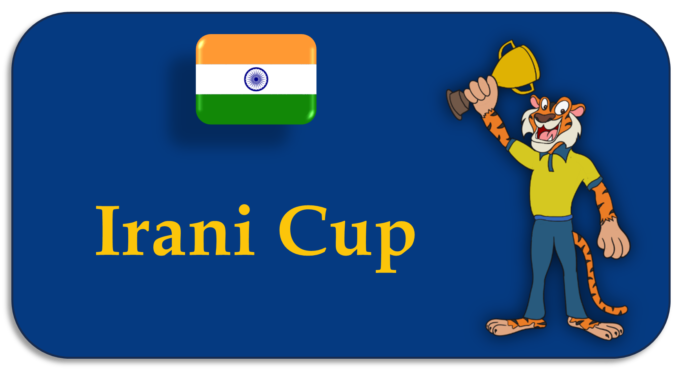
Irani Cup
The Irani Cup, also known as the Z R Irani Cup, is India’s classic first-class showdown played each season between the Ranji Trophy champion and a “Rest of India” side drawn from the best players outside that champion team. Since its first edition in 1960 (originally as a celebratory fixture for the Ranji Trophy), the Irani Cup has become a key marker in India’s domestic calendar. Over decades, it has witnessed epic Test-style duels, breakout performances and the gradual equalizing of state talent across the country.
In the most recent edition held from October 1 to October 5, 2025, Vidarbha clinched the title by 93 runs over Rest of India at the Vidarbha Cricket Association Stadium in Jamtha, Nagpur. Atharva Taide’s 143 and the pivotal spells by Harsh Dubey and Yash Thakur sealed the victory, marking Vidarbha’s third Irani Cup crown.










Introduction
People from all over India compete in the Z R Irani Cup, which is one of the most important first-class cricket events in the country. The tournament puts the winners of the Ranji Trophy against a team of players from the Rest of India. It is an important part of India's cricket season, featuring some of the best domestic players and showcasing the depth of Indian cricket. There are high stakes, strong competition, and plenty of interest around team performances and emerging talent.
People are excited about this event because it's uncertain and new cricket players are coming up. There is a high-quality match between the national elite and regional winners in the event, which makes it a must-see for cricket fans. As we move toward the 2025 Z R Irani Cup, the event is likely to bring fresh storylines, as new players join the scene and teams try to prove themselves in a cricket world that is always changing.
In India, the Z R Irani Cup is more than just a game; it has a big effect on the culture of cricket fans there. Regional pride, national competition, and an electric environment all come together to make the event more exciting for supporters. The Irani Cup also gives cricket followers a chance to watch promising players compete against established domestic stars while following the development of Indian cricket.
As a long-standing fixture since the 1959-1960 season, the Irani Cup was introduced to celebrate the 25th anniversary of the Ranji Trophy and is named after the esteemed Z. R. Irani, a dedicated BCCI treasurer whose influence helped shape Indian domestic cricket. The one-off, five-day first-class match pits the Ranji Trophy champions against a Rest of India side made up of standout players from across the country. This format not only creates a high-quality test of skill and strategies, but also often serves as a springboard for emerging talent to catch the eye of national selectors. For IndiaBetMaster.com users looking for insight, our Irani Cup coverage brings detailed analysis of match history, team approaches, player development and key moments from this prestigious domestic fixture.
For readers curious about a version in Hindi (ईरानी कप हिंदी समीक्षा) for a fresh regional perspective, we have seamlessly woven that offering into our coverage, again without disrupting the flow, and with useful takeaways on tactics and historical highlights that will sharpen your understanding.
Best Online Betting Sites in India - October 2026








































Current Season
The Irani Cup returns from 1 October to 5 October 2026 as one of the most emotionally charged fixtures in recent domestic memory, with Jammu and Kashmir hosting the match for the first time in 36 years. The BCCI confirmed that the Ranji Trophy champions will face the Rest of India across Jammu and Srinagar, marking a symbolic homecoming for top-tier red-ball cricket in the region. Jammu and Kashmir earned this right after their historic maiden Ranji Trophy title in the 2025-2026 season, achieved through a commanding first-innings lead over Karnataka in the final at Hubballi. The return of a major BCCI event to the Valley, last seen around 1990, adds cultural depth and a sense of sporting justice to this edition.
The significance of this match goes far beyond the fixture’s traditional role as the curtain-raiser to India’s red-ball season. Jammu and Kashmir’s Ranji triumph ended a 67-year wait and instantly reshaped the domestic cricket landscape, turning the Irani Cup into a celebration of resilience and regional pride. The Sher-i-Kashmir Stadium in Srinagar, which has hosted only 14 domestic and international matches since 1983, will finally receive the national spotlight again, supported by additional matches in Jammu as part of the hosting arrangement. For local fans, this is not just a match but a long-awaited validation of their cricketing identity.
The 2026-2027 domestic season is also the busiest in BCCI history, featuring 1,788 matches across men’s and women’s cricket, a scale that reflects the board’s push to expand competitive opportunities nationwide. Within this packed calendar, the Irani Cup remains a premium selection window, with senior Test selectors monitoring performances closely ahead of India’s tour of South Africa. The Rest of India squad is expected to include senior players seeking red-ball rhythm and top domestic performers from the previous season, while the Jammu and Kashmir core will be built around their Ranji heroes.
Crowd expectations in Jammu and Srinagar are naturally high. The region has waited decades for a marquee domestic event, and early local reports suggest strong ticket demand and a festival-like build-up. The Sher-i-Kashmir Stadium is known for its scenic backdrop and passionate crowds, and with the match spread across two cities, the atmosphere is expected to be vibrant. Cricket fans and analysts will be watching pitch behaviour closely, as early-October conditions in the Valley typically offer cool mornings, mild afternoons, and surfaces that can assist seamers early before settling into a true red-ball contest.
What is certain is that the Irani Cup 2026-2027 arrives at a rare intersection of sporting relevance and cultural resonance. Jammu and Kashmir’s rise has already become one of the most compelling stories in Indian domestic cricket, and hosting the Rest of India side on home soil adds a layer of pride that will energize players and fans alike. With selectors watching, discussions around team combinations and recent form, and the region preparing for its biggest cricketing week in decades, this edition promises a blend of high-quality cricket and heartfelt emotion that few Irani Cups in recent memory have matched.
Ongoing October 2026 Events
 |
ICC World Test Championship (WTC) Test | June 17, 2025 – June 13, 2027 | LIVE |
|
ICC Women's Championship ODI | February 20, 2026 – April 15, 2029 | LIVE |
 |
Minor League Cricket (MiLC) T20 | September 17, 2026 – October 25, 2026 | LIVE |
|
Cricket at the Asian Games T20I | September 17, 2026 – October 3, 2026 | |
  |
South Africa vs Australia Tour | September 24, 2026 – October 31, 2026 | LIVE |
 |
Col CK Nayudu Winners vs ROI FC | October 1–4, 2026 | |
|
Irani Cup FC | October 1–5, 2026 | |
 |
National Cricket League (NCL) FC | October 3, 2026 – November 17, 2026 | LIVE |
|
Vinoo Mankad Trophy List A | October 8–27, 2026 | LIVE |
  |
Sri Lanka vs Pakistan Tour | October 9, 2026 – November 21, 2026 | LIVE |
|
Women's U19 T20 Trophy T20 | October 9–26, 2026 | LIVE |
|
Ranji Trophy FC | October 11, 2026 – March 3, 2027 | LIVE |
|
Col CK Nayudu Trophy Multi-Day | October 12, 2026 – March 1, 2027 | LIVE |
 |
India vs New Zealand Tour | October 22, 2026 – December 1, 2026 | LIVE |
 |
Nepal Premier League (NPL) T20 | October 26, 2026 – November 21, 2026 | |
|
Senior Women's T20 Trophy T20 | October 26, 2026 – November 20, 2026 | |
 |
Bangladesh vs West Indies Test | October 28, 2026 – November 9, 2026 | |
|
Women's Big Bash League (WBBL) T20 | October 29, 2026 – December 5, 2026 | |
|
Women's U19 T20 Challenger Trophy T20 | October 30, 2026 – November 5, 2026 |
Ongoing October 2026 Events
|
ICC World Test Championship (WTC) Test | June 17, 2025 – June 13, 2027 | LIVE |
|
ICC Women's Championship ODI | February 20, 2026 – April 15, 2029 | LIVE |
|
Minor League Cricket (MiLC) T20 | September 17, 2026 – October 25, 2026 | LIVE |
|
Cricket at the Asian Games T20I | September 17, 2026 – October 3, 2026 | |
|
South Africa vs Australia Tour | September 24, 2026 – October 31, 2026 | LIVE |
|
Col CK Nayudu Winners vs ROI FC | October 1–4, 2026 | |
|
Irani Cup FC | October 1–5, 2026 | |
|
National Cricket League (NCL) FC | October 3, 2026 – November 17, 2026 | LIVE |
|
Vinoo Mankad Trophy List A | October 8–27, 2026 | LIVE |
|
Sri Lanka vs Pakistan Tour | October 9, 2026 – November 21, 2026 | LIVE |
|
Women's U19 T20 Trophy T20 | October 9–26, 2026 | LIVE |
|
Ranji Trophy FC | October 11, 2026 – March 3, 2027 | LIVE |
|
Col CK Nayudu Trophy Multi-Day | October 12, 2026 – March 1, 2027 | LIVE |
|
India vs New Zealand Tour | October 22, 2026 – December 1, 2026 | LIVE |
|
Nepal Premier League (NPL) T20 | October 26, 2026 – November 21, 2026 | |
|
Senior Women's T20 Trophy T20 | October 26, 2026 – November 20, 2026 | |
|
Bangladesh vs West Indies Test | October 28, 2026 – November 9, 2026 | |
|
Women's Big Bash League (WBBL) T20 | October 29, 2026 – December 5, 2026 | |
|
Women's U19 T20 Challenger Trophy T20 | October 30, 2026 – November 5, 2026 |

Previous Seasons
Past Irani Cup Editions
- 2025-2026 Season
The 2025-2026 Irani Cup, played from 1 to 5 October 2025, delivered a sharp, competitive finish as Vidarbha defeated the Rest of India by 93 runs at the VCA Stadium in Nagpur. As Ranji Trophy champions, Vidarbha earned home advantage and used it well on a surface that rewarded discipline across five days. The one-off first-class match followed the traditional structure of the Irani Cup, with the Rest of India squad featuring standout performers from the domestic season. Vidarbha’s first-innings control and composed batting phases shaped the match, giving them enough cushion to close out their third Irani Cup title.
This edition also stood out for its strong local turnout and the return of a full-house atmosphere in Nagpur, helped by consistent television and digital coverage across India. The fixture maintained its role as a key red-ball benchmark, with selectors and analysts closely watching performances that could influence India A and long-format national opportunities. With a clear result, a traditional five-day structure, and a champion that maximized home conditions, the 2025-2026 Irani Cup reinforced its reputation as one of the most meaningful events in the domestic calendar.
- 2024-2025 Season
Mumbai, winners of the Ranji Trophy, played an exciting game against the Rest of India team in the 2024-2025 Irani Cup. The match at the Ekana Cricket Stadium in Lucknow had a lot of runs, but it finished in a tie. Mumbai were declared the winners thanks to their first-innings lead. Mumbai were very happy with this win because it was their first Irani Cup title in 27 years. Some amazing individual efforts made the match what it was. The star of the show was Sarfaraz Khan, whose name many Indian cricket fans have been talking about. That steady, dominant double-century he hit in the first innings (222 not out) won him the Player of the Match award, which was well-deserved. For the Rest of India team, opening batter Abhimanyu Easwaran also showed how good he is with a brilliant 191. This shows how much ability there is in India.
There is only one first-class match over five days, which is how the Irani Cup has always been played. They play a Rest of India team selected by the BCCI, featuring some of the best performers from domestic cricket. The winner of the Ranji Trophy faces this side in a traditional first-class contest, with normal red-ball rules applying. If the game ends in a tie, the team that led after the first innings is named the winner. This rule adds another layer of strategy, as teams need to build a strong first-innings total while managing the balance between attack and control. The decision to move the match from Mumbai to Lucknow to avoid possible weather delays was also a key organizational change that helped ensure the fixture went ahead as planned.
The previous edition had an effect on cricket across India. Mumbai's long-awaited win was a major story in the domestic cricket calendar, showing their continued strength at the highest level of Indian first-class cricket. Players like Sarfaraz Khan and Abhimanyu Easwaran were also praised for their skills during the match, keeping them in the national spotlight. A big part of the event's overall impact was the widespread broadcast and media coverage. The match was shown live on TV and streamed online, which helped bring the competition to a wider audience. The event's growing visibility continues to strengthen the importance of the Irani Cup and its role in highlighting India's domestic cricket talent.
- Earlier Seasons
The Board of Control for Cricket in India (BCCI) hosted the 60th edition of the Irani Cup, a first-class cricket tournament in India, in 2023-2024. Due to sponsorship reasons, the event was also known as the IDFC First Bank Irani Cup. From October 1 to October 5, 2023, it was played. Saurashtra, the 2022-2023 Ranji Trophy winners, and the Rest of India team competed in a one-off match.
The BCCI announced the tournament's entry in the 2023 Indian domestic cricket season in April of that year. The Rest of India, the reigning champions, won the match by defeating Saurashtra in the final contest.
The Irani Cup match between the Rest of India and Saurashtra took place from October 1-5, 2023, at the Saurashtra Cricket Association Stadium in Rajkot. The Rest of India team secured a commanding victory by 175 runs. Batting first, the Rest of India scored 308, led by Sai Sudharsan's 72, with Parth Bhut taking 5/94 for Saurashtra. Saurashtra replied with 214, with Arpit Vasavada top scoring at 54 and Saurabh Kumar taking 4/65. In the second innings, the Rest of India managed 160, setting Saurashtra a challenging target, with Mayank Agarwal scoring 49 and Bhut taking 7/53. Saurashtra was bowled out for 79 in their chase, with Saurabh Kumar taking 6/43, earning him the Man of the Match award for his 10-wicket haul.
The Irani Cup has evolved into one of India’s most prestigious domestic cricket competitions. Over the years, it has produced some memorable moments and showcased the country’s top cricketing talent. The competition traditionally pits the Ranji Trophy champions against a Rest of India team, creating a platform for emerging stars to prove their mettle alongside seasoned players.
One of the most iconic matches in Irani Cup history took place in 1990-1991, when the game ended in a rare tie. Representing Bombay, a young Sachin Tendulkar emerged as the match’s standout performer, scoring a brilliant century that hinted at his future greatness. The match’s tension and drama made it an unforgettable encounter that is still discussed among cricket enthusiasts.
Another highlight occurred in the 2002-2003 season when Mumbai took on the Rest of India. In this game, Wasim Jaffer etched his name into the record books by scoring a double century, setting the tone for what would be a remarkable career in domestic cricket. His performance not only led Mumbai to victory but also demonstrated the depth of talent within India’s domestic cricket structure.
The 2012-2013 edition is remembered for a masterclass in batting by Shikhar Dhawan and Murali Vijay, who both scored centuries for the Rest of India. Their partnership set up a dominant win over Rajasthan, and the match is often cited as a key moment in both players’ careers, particularly as they went on to achieve significant success in international cricket.
| Season | Champion | Runner-up | Final Result | Event / Final Location |
|---|---|---|---|---|
| 2025-2026 | Vidarbha | Rest of India | Vidarbha won by 93 runs | Vidarbha Cricket Association Stadium, Nagpur |
| 2024-2025 | Mumbai | Rest of India | Match drawn, Mumbai won on first-innings lead | Ekana Cricket Stadium, Lucknow |
| 2023-2024 | Rest of India | Saurashtra | Rest of India won by 175 runs | Niranjan Shah Stadium, Rajkot |
| 2022-2023 | Rest of India | Madhya Pradesh | Rest of India won by 238 runs | Captain Roop Singh Stadium, Gwalior |
| 2019-2020 | Rest of India | Saurashtra | Rest of India won by 8 wickets | Niranjan Shah Stadium, Rajkot |
| 2017-2018 | Vidarbha | Rest of India | Match drawn, Vidarbha won on first-innings lead | Vidarbha Cricket Association Stadium, Nagpur |
| 2016-2017 | Rest of India | Gujarat | rest of India won by 6 wickets | Brabourne Stadium, Mumbai |
| 2015-2016 | Rest of India | Mumbai | Rest of India won by 4 wickets | Brabourne Stadium, Mumbai |
| 2014-2015 | Karnataka | Rest of India | Karnataka won by 246 runs | M. Chinnaswamy Stadium, Bengaluru |
| 2013-2014 | Karnataka | Rest of India | Karnataka won by an innings and 222 runs | M. Chinnaswamy Stadium, Bengaluru |
| 2013 | Rest of India | Mumbai | Match drawn, Rest of India won on first-innings lead | Wankhede Stadium, Mumbai |
| 2012-2013 | Rest of India | Rajasthan | Rest of India won by an innings and 79 runs | M. Chinnaswamy Stadium, Bengaluru |
| 2011-2012 | Rest of India | Rajasthan | Rest of India won by 404 runs | Sawai Mansingh Stadium, Jaipur |
| 2010-2011 | Rest of India | Mumbai | Rest of India won by 361 runs | Sawai Mansingh Stadium, Jaipur |
| 2009-2010 | Rest of India | Mumbai | Match drawn, Rest of India won on first-innings lead | Vidarbha Cricket Association Stadium, Nagpur |
| 2008-2009 | Rest of India | Delhi | Rest of India won by 187 runs | Reliance Stadium, Vadodara |
| 2007-2008 | Rest of India | Mumbai | Rest of India won by 9 wickets | Madhavrao Scindia Cricket Ground, Rajkot |
| 2006-2007 | Rest of India | Uttar Pradesh | Rest of India won by 9 wickets | Vidarbha Cricket Association Stadium, Nagpur |
| 2005-2006 | Railways | Rest of India | Railways won by 9 wickets | Karnail Singh Stadium, Delhi |
| 2004-2005 | Rest of India | Mumbai | Rest of India won by 290 runs | I. S. Bindra Stadium, Mohali |
| 2003-2004 | Rest of India | Mumbai | Rest of India won by 3 wickets | M. A. Chidambaram Stadium, Chennai |
| 2002-2003 | Railways | Rest of India | Railways won by 5 wickets | Karnail Singh Stadium, Delhi |
| 2001-2002 | Rest of India | Baroda | Rest of India won by 6 wickets | Vidarbha Cricket Association Stadium, Nagpur |
| 2000-2001 | Rest of India | Mumbai | Rest of India won by 10 wickets | Wankhede Stadium, Mumbai |
| 1999-2000 | Rest of India | Karnataka | Rest of India won by innings and 60 runs | M. Chinnaswamy Stadium, Bengaluru |
| 1998-1999 | Karnataka | Rest of India | Match drawn, Karnataka won on first-innings lead | M. Chinnaswamy Stadium, Bengaluru |
| 1997-1998 | Mumbai | Rest of India | Mumbai won by 54 runs | Wankhede Stadium, Mumbai |
| 1996-1997 | Karnataka | Rest of India | Karnataka won by 5 wickets | M. Chinnaswamy Stadium, Bengaluru |
| 1995-1996 | Mumbai | Rest of India | Mumbai won by 9 wickets | Wankhede Stadium, Mumbai |
| 1994-1995 | Mumbai | Rest of India | Match drawn, Mumbai won on first-innings lead | Wankhede Stadium, Mumbai |
| 1993-1994 | Rest of India | Punjab | Rest of India won by 181 runs | Punjab Agricultural University Stadium, Ludhiana |
| 1992-1993 | Rest of India | Delhi | Rest of India won by an innings and 122 runs | Feroz Shah Kotla, Delhi |
| 1991-1992 | Haryana | Rest of India | Haryana won by 4 wickets | Nahar Singh Stadium, Faridabad |
| 1990-1991 | Rest of India | Bengal | Match drawn, Rest of India won on first-innings lead | M. Chinnaswamy Stadium, Bengaluru |
| 1989-1990 | Delhi | Rest of India | Delhi won by 309 runs | Wankhede Stadium, Mumbai |
| 1988-1989 | Tamil Nadu | Rest of India | Tamil Nadu won by 3 wickets | M. A. Chidambaram Stadium, Chennai |
| 1987-1988 | Hyderabad | Rest of India | Match drawn, Hyderabad won on first-innings lead | Gymkhana Ground, Secunderabad |
| 1986-1987 | Rest of India | Delhi | Rest of India won by an innings and 232 runs | Barkatullah Khan Stadium, Jodhpur |
| 1985-1986 | Mumbai | Rest of India | Match drawn, Mumbai won on first-innings lead | Vidarbha Cricket Association Stadium, Nagpur |
| 1984-1985 | Rest of India | Mumbai | Rest of India won by 4 wickets | Feroz Shah Kotla, Delhi |
| 1983-1984 | Karnataka | Rest of India | Match drawn, Karnataka won on first-innings lead | Madhavrao Scindia Cricket Ground, Rajkot |
| 1982-1983 | Rest of India | Delhi | Rest of India won by 5 wickets | Feroz Shah Kotla, Delhi |
| 1981-1982 | Mumbai | Rest of India | Match drawn, Mumbai won on first-innings lead | Nehru Stadium, Indore |
| 1980-1981 | Delhi | Rest of India | Match drawn, Delhi won on first-innings lead | Feroz Shah Kotla, Delhi |
| 1979-1980 | -- | -- | Match abandoned, trophy shared | Gandhi Stadium, Jalandhar |
| 1978-1979 | Rest of India | Karnataka | Rest of India won by 9 wickets | M. Chinnaswamy Stadium, Bengaluru |
| 1977-1978 | Rest of India | Mumbai | Rest of India won by an innings and 168 runs | Wankhede Stadium, Mumbai |
| 1976-1977 | Mumbai | Rest of India | Mumbai won by 10 wickets | Feroz Shah Kotla, Delhi |
| 1975-1976 | Mumbai | Rest of India | Match drawn, Mumbai won on first-innings lead | Vidarbha Cricket Association Stadium, Nagpur |
| 1974-1975 | Karnataka | Rest of India | Match drawn, Karnataka won on first-innings lead | Sardar Vallabhbhai Patel Stadium, Navrangpura |
| 1973-1974 | Rest of India | Mumbai | Match drawn, Rest of India won on first-innings lead | M. Chinnaswamy Stadium, Bengaluru |
| 1972-1973 | Mumbai | Rest of India | Mumbai won by 220 runs | Nehru Stadium, Pune |
| 1971-1972 | Rest of India | Mumbai | Rest of India won by 119 runs | Brabourne Stadium, Mumbai |
| 1970-1971 | Mumbai | Rest of India | Match drawn, Mumbai won on first-innings lead | Eden Gardens, Kolkata |
| 1969-1970 | Mumbai | Rest of India | Match drawn, Mumbai won on first-innings lead | Pune Club Ground, Pune |
| 1968-1969 | Rest of India | Mumbai | Rest of India won by 119 runs | Brabourne Stadium, Mumbai |
| 1967-1968 | Mumbai | Rest of India | Match drawn, Mumbai won on first-innings lead | Brabourne Stadium, Mumbai |
| 1966-1967 | Rest of India | Mumbai | Rest of India won by 6 wickets | Eden Gardens, Kolkata |
| 1965-1966 | Mumbai & Rest of India | -- | Match drawn, trophy shared as first innings were not completed | Jawaharlal Nehru Stadium, Chennai |
| 1963-1964 | Mumbai | Rest of India | Mumbai won by 109 runs | Neelam Sanjiva Reddy Stadium, Anantapur |
| 1962-1963 | Mumbai | Rest of India | Match drawn, Mumbai won on first-innings lead | Brabourne Stadium, Mumbai |
| 1959-1960 | Mumbai | Rest of India | Match drawn, Mumbai won on first-innings lead | Karnail Singh Stadium, Delhi |
* 1960-1961, 1961-1962, 1964-1965: No edition held.
** 2020-2021, 2021-2022: Not held due to COVID-19 disruptions.
History and Structure
To commemorate the 25th anniversary of the Ranji Trophy, the Irani Cup, or Irani Trophy as it was formerly known, made its first appearance during the 1959-1960 season. It bears the name of Z. R. Irani, a BCCI associate and former treasurer. The cup, which is a single first-class cricket fixture, has grown in popularity over the years among followers of Indian domestic cricket.
Once played at the start of each cricket season, the cup became an important part of the Indian domestic cricket calendar. During the 2012-2013 season, the cup moved to the season's conclusion, immediately following the Ranji Trophy itself. Due to the scheduling changes that season, two Irani Cup matches were played. As it is held near the season's conclusion, the Irani Cup continues to remain a major fixture in India's domestic cricket structure.
The inaugural match between the Ranji Trophy winners and the Rest of India took place in 1959-1960. The trophy was named in honor of Z. R. Irani, a devoted cricket fan and longtime treasurer of the Board of Control for Cricket in India. It was played around the end of the season for the first several years. Recognizing the significance of the fixture, the BCCI relocated it to the start of the season, where it was traditionally held to mark the commencement of the new domestic season from 1965-1966 until 2012-2013.
It was changed in 2013 to a time immediately following the Ranji Trophy final, which resulted in two Irani Cup games in the 2012-2013 season. Since then, the match has continued to be played after the season, immediately after the Ranji Trophy final. For the first time in the tournament's history, the BCCI opted to hold the 2019-2020 and 2022-2023 editions back-to-back in 2022, with the matches being held in Rajkot and Indore, respectively.
The domestic Indian cricket tournament's Z. R. Irani Cup, formerly known as the Irani Trophy, was scheduled to be played for the 58th time in 2020. The BCCI (Board of Control for Cricket in India) postponed domestic cricket in India due to the coronavirus outbreak, affecting the Irani Cup match that was scheduled between March 18 and March 22, 2020. This one-off game, which is played just after the Ranji Trophy, pits the champion of that competition against a Rest of India squad featuring some of the country's top domestic cricketers. The 60th edition of the Irani Cup was played in which Rest of India defeated the Mumbai Team and became victorious.
Final Thoughts
One of the top international cricket teams is the India Cricket Team. This is partly attributable to their robust domestic cricket system, which has produced some of the nation's top players. It is crucial to understand the role and impact domestic cricket has on the India Cricket Team since it has long been believed that domestic cricket contributes significantly to a country's success in international cricket.
Some of the best cricketers in the nation represent India on the national cricket team. Young, promising players can polish their abilities in domestic cricket while also having the chance to face off against seasoned professionals. Domestic cricket was where many of the present stars of India's national team started their careers and where they were eventually able to demonstrate their skill and earn selection for the squad. Irani Cup is one such tournament that has helped showcase talented players over the years.
It is impossible to overstate how much domestic cricket affects India's national squad. It offers a stage for the game's present superstars while also building a talent pool of prospective players who can step in when players are unable to participate due to obligations elsewhere. Also, domestic cricket keeps cricket fans engaged, which is crucial when India isn't participating in international competitions.
Did You Know
