Domestic Cricket
Cricket in India isn’t just a game, it’s a passion that binds the country together, from the bustling streets of Mumbai to the quiet fields of rural villages. Domestic cricket is the heartbeat of this sport, where players battle it out on the field for regional glory and a chance to rise to the international stage. From the prestigious Ranji Trophy to the fast-paced IPL, each tournament has its own unique charm and cultural impact. The Duleep Trophy, with its historic rivalries, and the Syed Mushtaq Ali Trophy, showcasing India’s T20 talent, stir excitement among fans and bettors alike. The Irani Trophy, once a curtain-raiser to the season, is still a much-anticipated event, while the Women’s IPL (WPL) is gaining traction and making history.
These competitions are more than just sporting events, they’re a reflection of India’s love for cricket, the thrill of betting, and the deep connections that fans share with the game. Whether you’re in it for the action, the drama, or the stakes, Indian domestic cricket has something to offer for everyone.
Cricket, Casino Games and Online Gaming in India
IndiaBetMaster provides a broad editorial view of cricket, online gaming and the digital betting ecosystem in India. The platform covers major tournaments, domestic leagues and international fixtures, alongside the growing world of online casino play and the technologies that support it.
Our coverage spans ICC events, the IPL and other domestic competitions, as well as popular gaming formats such as Teen Patti, Rummy, crash games and live casino titles. We also examine how platforms operate, including payment methods, odds, bet types, bonuses and promotional structures, giving readers a clearer understanding of the mechanics behind online play.
In addition to event coverage and platform analysis, the site offers practical guidance on digital safety and responsible gaming. Whether readers are following a series, exploring casino games or learning how online betting works, IndiaBetMaster serves as a reliable reference point built on context, accuracy and relevance.

Sports: 200% up to ₹1,00,000 / Casino: 200% up to ₹1,00,000 + 500 Chicken Road 2 Free Spins
- Enjoy fast withdrawals and deposits
- Access a wide range of sports
- Read Review

Sports: 200% up to ₹20,000 (Bonus Code: DSFDB200INR) / Casino: 100% up to ₹20,000
- Features diverse sports betting options
- Offers fast UPI deposits for convenience
- Read Review

Sports: 500% up to ₹82,000 + 440 Free Spins / Casino: 350% up to ₹82,000 + 445 Free Spins
- Huge range of sports betting markets
- Trusted platform with strong data security
- Read Review

Sports & Casino: 500% up to ₹75,000
- Wide sports coverage including cricket
- Secure UPI and Paytm payments
- Read Review
| Rank | Brand | Best Bonsu Offer | Expert Review | Claim Bonus Now | |
|---|---|---|---|---|---|
| 1 |
 |
Rajabets | Sports: 200% up to ₹1,00,000 / Casino: 200% up to ₹1,00,000 + 500 Chicken Road 2 Free Spins | Read Review | |
| 2 |
 |
Dafabet | Sports: 200% up to ₹20,000 (Bonus Code: DSFDB200INR) / Casino: 100% up to ₹20,000 | Read Review | |
| 3 |
 |
Mostbet | Sports: 500% up to ₹82,000 + 440 Free Spins / Casino: 350% up to ₹82,000 + 445 Free Spins | Read Review | |
| 4 |
 |
Tez888 | Sports & Casino: 500% up to ₹75,000 | Read Review | |
| 5 |
 |
Parimatch | Sports: 150% up to ₹20,000 / Slots: 150% up to ₹1,05,000 / Aviator: 100% up to ₹30,000 | Read Review | |
| 6 |
 |
Megapari | Sports: 200% up to ₹40,000 / Casino: Welcome Package up to ₹133,700 + 150 Free Spins | Read Review | |
| 7 |
 |
Leon | Sports: Changing Bonuses / Casino: 370% up to ₹60,000 + 120 Free Spins | Read Review | |
| 8 |
 |
Bettilt | Sports: 100% up to ₹50,000 / Casino: 100% up to ₹50,000 + 50 Free Spins | Read Review | |
| 9 |
 |
BetWinner | Sports: 100% up to ₹8,000 / Welcome Package up to ₹127,000 + 150 Free Spins | Read Review | |
| 10 |
 |
1xBet | Casino: 400% up to ₹50,000 or 300% up to ₹1,50,000 | Read Review | |
| 11 |
 |
10Cric | Sports & Casino: 150% up to ₹20,000 (Bonus Code: WELCOME150) | Read Review | |
| 12 |
 |
JeetKhel | Casino: 450% up to ₹35,000 | Read Review | |
| 13 |
 |
20Bet | Sports: 100% up to €100 (₹10,500) / Casino: 150% up to €220 (₹23,000) + 170 Free Spins | Read Review | |
| 14 |
 |
4RaBet | Sports: 700% up to ₹20,000 / Casino: 150% up to ₹10,000 + 200 Free Spins | Read Review | |
| 15 |
 |
FTV Club | Sports: 100% up to ₹15,000 / Casino: 100% up to ₹20,000 + 20 Free Spins | Read Review | |
| 16 |
 |
Crickex | Slots: 150% up to ₹1,000 / Changing Promotions & Deals | Read Review | |
| 17 |
 |
9Winz | Casino: 450% up to ₹3,00,000 / Crash Games: 700% up to ₹1,00,000 | Read Review | |
| 18 |
 |
Fresh | Sports: 300% up to ₹20,000 / Casino: 175% up to ₹45,000 | Read Review | |
| 19 |
 |
7Cric Neo | Sports: 30% up to ₹5,000 / Casino: 10% up to ₹10,000 | Read Review | |
| 20 |
 |
Drip | Sports: 150% up to ₹10,000 / Casino: 150% up to ₹30,000 | Read Review | |
| 21 |
 |
22Bet | Sports: 100% up to ₹10,300 / Casino: 200% up to ₹135,000 + 150 Free Spins | Read Review | |
| 22 |
 |
Jet | Sports: 300% up to ₹20,000 / Casino: 175% up to ₹45,000 | Read Review |
General Details
The Board of Control for Cricket in India (BCCI) is the organization in charge of overseeing cricket in India. It organizes all domestic leagues and chooses the players for both the men's and women's national teams. These leagues also provide an opportunity for gamblers to place their bets on different matches and players. The betting sites become flooded with people placing their bets during the tournament's season.
Whether you're a fan of the Ranji Trophy, the Duleep Trophy, or the fast-paced IPL, we cover all the essential details of these exciting tournaments. Domestic cricket not only showcases the talent within India but also offers a prime opportunity for cricket enthusiasts and bettors to make informed decisions during these events. At IndiaBetMaster.com, we ensure you have the latest updates on matches, players, and the best betting brands available to enhance your experience.
For our Hindi-speaking readers, we also provide all this information in Hindi (भारतीय घरेलू क्रिकेट हिंदी समीक्षा). Whether you're tracking domestic cricket or seeking reliable betting guidance, IndiaBetMaster.com strives to make your cricket journey as engaging and accessible as possible, offering comprehensive insights and tips for every cricket fan.


Information
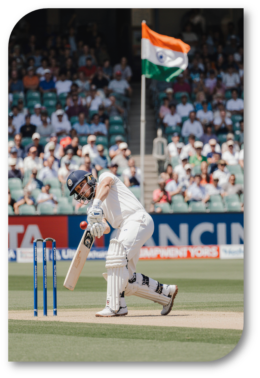
Domestic cricket in India is the backbone of the nation’s sporting calendar, carefully structured by the Board of Control for Cricket in India (BCCI) to nurture talent, sustain competitive standards, and align with international commitments. Spread across formats (multi-day, one-day, and T20) the calendar integrates men’s, women’s, and youth competitions, ensuring that every level of the game has a clear pathway from grassroots to the national team.
The Indian Domestic Cricket season typically runs from late summer through spring, with red-ball tournaments like the Ranji Trophy anchoring the winter months, one-day events bridging the calendar, and T20 competitions providing high-voltage action before global tournaments. For women and youth, parallel structures such as the Senior Women’s One Day Trophy or U23 T20 Trophy mirror this design, offering exposure and progression opportunities. Together, these events form a continuous cycle where performance in domestic cricket directly influences international selection, while also fueling India’s vibrant sporting culture and the analytical interest of fans and bettors who follow the unique rhythms of each format.
Men Domestic Cricket in India
Indian men’s domestic cricket grew from first-class roots in the 1930s into a layered, year-round ecosystem spanning multi-day, one-day, and T20 formats. The Ranji Trophy set the foundation for state-vs-state red-ball rivalry, followed by inter-zonal selection platforms and marquee one-off fixtures that tested champions against composite “Rest of India” lineups. Over time, commercialization, broadcast reach, and audience preference accelerated shorter formats, culminating in the IPL’s franchise model that reshaped scheduling, player pathways, and the sport’s cultural footprint. Milestones include the transition from zonal to Elite/Plate tiers, the establishment of national List-A and T20 tournaments, and strategic format tweaks by BCCI to balance development with spectacle.
The domestic calendar now deliberately interlocks: red-ball events preserve endurance and depth, one-day tournaments polish white-ball skills, and T20 competitions showcase tempo and innovation. Age-group championships like the Col CK Nayudu Trophy and U23 State A Trophy ensure continuity of talent, while legacy fixtures such as the Irani Cup keep standards anchored to first-class excellence. For Indian readers tracking sport and markets, the distinct rhythms (multi-day grind, 50-over baseline, and T20 volatility) create different analytical angles and momentum signals across the season.
- Indian Premier League (IPL)
Launched in 2007 and first played in 2008, the Indian Premier League (IPL) is a men’s T20 franchise league with ten city-based teams, staged annually between March and May. It is one of the world’s most-watched and highest-revenue sports properties, driven by auctions, home-and-away scheduling, and playoffs that maximize competitive drama. The league expanded to ten teams in 2022, with historic brand impact and record broadcast audiences across India. For betting-oriented analysis, IPL’s short format amplifies venue effects, chasing biases, and micro-trends like powerplay strike rates and death-overs economy, making pre-match lines and in-play swings particularly sensitive to toss, dew, and matchups.
- Ranji Trophy
The Ranji Trophy is India’s premier first-class competition dates to 1934-1935 and now fields 38 state and regional sides. Since 2022-2023, Ranji uses a two-tier system (Elite and Plate) with 32 teams across four Elite groups and six in Plate, featuring relegation and promotion to preserve quality while widening participation. The season typically runs for ten weeks throughout the winter, culminating in separate Elite and Plate finals. Historically, Mumbai’s dominance is unmatched, though regional depth has evened out in recent decades. For market readers, Ranji rewards slower, data-led angles: batting depth over four innings, away-ground adaptability, and draw probabilities, less volatility than T20s, more weight on pitch wear and session-by-session control.
- Vijay Hazare Trophy
Vijay Hazare Trophy, the national List-A (50 overs) competition, named in honor of Vijay Hazare, evolved from zonal one-day cricket to a countrywide tournament. It currently features 38 teams split into five groups (A-E), playing round-robin followed by knockouts. The format balances consistency and upsets, and Karnataka and Tamil Nadu are the most successful teams historically in the national era. As the OD pathway event, it develops white-ball roles, pace rotation, middle-overs control, and finishing, and typically runs in the winter window. From an analysis standpoint, team NRR trends, depth of allrounders, and fielding quality are central, while travel logistics and back-to-back fixtures can tilt stamina and execution in late-stage matches.
- Syed Mushtaq Ali Trophy
The Syed Mushtaq Ali Trophy, India’s domestic T20 championship, began in 2006-2007 as the Inter-State T20 and was renamed to honor Syed Mushtaq Ali. It mirrors the Ranji footprint with 38 teams across Elite and Plate tiers, staged shortly before IPL auctions, turning performances into immediate selection signals. The tournament’s volatility (short matches, knockout pressure) elevates tactical stats like powerplay boundary rates, spin-use in middle overs, and live momentum shifts. Upsets are common, and smaller units can outperform with sharper T20 roles. For readers tracking markets, it’s a prime event for in-play adjustments and venue-specific strike-rate patterns rather than long historical head-to-heads.
- Irani Cup
Introduced in 1959-1960 to mark 25 years of the Ranji Trophy, the Irani Cup is a first-class one-off match between the Ranji champions and the Rest of India. Named after Zal R. Irani, it traditionally opened during the domestic season but now often follows the Ranji final. Rest of India has historically led the series, reflecting composite strength. From an analytical lens, the Irani Cup’s uniqueness lies in single-match dynamics: team news, player workload coming off Ranji, and selection blends tilt the balance. With a five-day window, session control and first-innings leads are decisive, framing conservative vs. aggressive declarations as pivotal markers.
- Duleep Trophy
Founded in 1961-1962, the Duleep Trophy is a first-class competition that historically featured zonal teams (North, South, East, West, Central), with occasional format shifts -foreign guest sides, India Red/Blue/Green (2016-2019), and recent editions experimenting with multi-team round-robins selected by national selectors. It functions as a selection showcase bridging domestic excellence and higher honors, often scheduled in the monsoon-late monsoon window. Analytical interest is niche but rich: mixed-composition squads, role clarity, and selectors’ trial objectives can matter more than pure zonal continuity, nudging markets toward team sheets and balance rather than legacy narratives.
- Men’s U23 State A Trophy
Men’s U23 State A Trophy is an ongoing national one-day (50 overs) event tailored to under-23 talent, the State A Trophy features a broad field and has recently operated with Elite and Plate tiers to sharpen competitive stakes. The window typically sits between November and early December, with promotion-relegation signals and a compact schedule. For readers viewing it through a market lens, youth variance is intrinsic: form can spike rapidly, squads rotate to manage workloads, and fielding lapses or breakout knocks swing NRRs. Evaluating academy pipelines, recent age-group performance, and travel-heavy back-to-backs often beats pure historical rankings.
- Col CK Nayudu Trophy
Named for India’s first Test captain, the Col CK Nayudu Trophyunder-23 multi-day (four-day) championship has shifted age limits over time but currently runs at U23 with 38 teams, in Elite and Plate tiers. It builds red-ball temperament - long spells, defensive technique, and patience. Scheduling across October-March aligns with the main domestic season. For analytical readers, multi-day youth formats emphasize endurance and coaching quality: first-innings leads, collapse resistance, and spin usage across day three and four become core indicators, offering steadier signals than T20s and more development-focused than senior first-class tournaments.
- Col CK Nayudu Winners vs Rest of India (ROI)
This first-class showcase pits the CK Nayudu Trophy champions against a Rest of India lineup, staging a developmental “best of youth vs best composite” examination. The fixture has appeared in the domestic calendar and may be staged post-season, with first-innings leads deciding drawn outcomes as in traditional first-class practice. Analytical interest centers on squad announcements and role matchups (young leaders testing against seasoned pros) where innings tempo and declaration timing heavily influence probabilities. As an irregular calendar piece, it rewards close reading of team composition and pitch prep over long-form historical trend lines.
Paused or Discontinued Events
- Deodhar Trophy
The Deodhar Trophy, a 50-over inter-zonal List-A competition started in 1973-1974, has experienced interruptions due to scheduling constraints, including a confirmed cancellation for the 2009-2010 season and later pauses amid domestic calendar congestion. It returned in newer formats (including India A/B/C and zonal revivals) and was staged in 2023, but its continuity has depended on broader calendar priorities. When active, Deodhar highlights one-day specialists and selection depth; when paused, it reflects BCCI’s rebalancing of formats to accommodate expanding T20 windows and age-group priorities. If referenced for analysis, treat season-to-season availability as variable and rely on current BCCI listings for confirmation.
Women Domestic Cricket in India
Women’s domestic cricket in India has grown from a small state circuit in the mid 2000s into a layered pathway that covers Twenty20, One Day and multi day formats. The BCCI built this structure step by step: senior state trophies established the base, Elite and Plate tiers widened participation, zonal events added a higher competitive rung, and compact Challenger contests sharpened selection for international duty. The arrival of the franchise era in 2023 gave the ecosystem mainstream visibility, while the reappearance of multi day contests has restored red ball skills that matter for long form cricket. Together, these pieces form a calendar that runs across most of the year, moving from senior state competitions to zonal and elite showcases, with age group tournaments feeding the pipeline.
For Indian readers, this matters culturally and practically. It mirrors the rigor of men’s domestic cricket while tuning formats to modern viewing habits. It also creates predictable rhythms for analysis: Elite vs Plate trends at state level, varied team balance in zonal squads, and tight, high stakes windows in the elite Challenger segment. For betting aware audiences, the ecosystem offers distinct informational edges across formats, from long sample sizes that reveal stable patterns to short tournaments where toss bias, venue behavior and squad construction can outweigh recent form.
- Women’s Premier League (WPL)
The Women’s Premier League (WPL) is the flagship franchise Twenty20 competition introduced in 2023. Modeled on city teams and an auction system, it runs in a late winter window and quickly became a primetime staple with nationwide broadcast and digital reach. What makes the WPL unique is the volatility baked into franchise rosters: overseas signings, auction strategy and role clarity change year to year, so powerplay intent, middle over spin usage and death bowling plans can swing outcomes within short spans. From a betting guidance standpoint, market movement tends to track squad balance and conditions more than historical head to head, and live totals often hinge on how teams manage overs 7 to 15.
- Senior Women’s One Day Trophy
The Senior Women’s One Day Trophy, first held in 2006-2007 and now structured with Elite and Plate groups, remains the backbone of the domestic system. Dozens of state teams play round robin phases followed by knockouts, creating a deep sample of List A cricket across varied venues. Its cultural importance lies in its scale and consistency, which shape selection and team philosophies. For betting oriented readers, Elite vs Plate separation matters: run rate bands, spin economy and par score drift differ across tiers, and travel plus day games can influence totals more predictably than in T20.
- Senior Women’s T20 Trophy
The Senior Women’s T20 Trophy, introduced in 2008-2009, is the nationwide state Twenty20 competition that often marks the early season. With Elite and Plate tiers, it compresses high volume short format cricket into a few intense weeks. The hallmark here is volatility: underdogs turn matches with powerplay bursts or spin heavy middle overs, and smaller grounds plus evening conditions can spike boundary frequency. Guidance wise, form is less sticky than in One Day; reading venue pace, dew likelihood and bowling matchups to left right pairs tends to matter most, especially in knockouts.
- Senior Women’s One Day Challenger Trophy
The Senior Women’s One Day Challenger Trophy is the compact elite List A window where selectors group top players into select squads such as India A, India B, India C and India D. Typically scheduled in the mid or late season, it condenses high quality 50 over cricket into a handful of games where every innings is scrutinized. Its uniqueness is the concentration of talent and the small sample size, so toss decisions, par scores and batting order flexibility carry outsized impact. For market analysis, squad balance and pitch behavior outweigh longer trend lines, and totals can recalibrate quickly after early wickets.
- Senior Women’s Inter Zonal One Day Trophy
The Senior Women’s Inter Zonal One Day Trophy brings six zonal teams into List A competition, blending players from multiple states to produce varied team profiles. The event adds regional identity and raises the tactical bar, with zones known for particular strengths such as wrist spin depth or seam movement in specific venues. It matters culturally because zonal pride and mixed squads test adaptability beyond familiar state setups. From a betting lens, historical zonal strengths, neutral venue effects and compact schedules are useful, and totals often track how well zones rotate strike in the middle overs.
- Senior Women’s Inter Zonal T20 Trophy
The Senior Women’s Inter Zonal T20 Trophy applies the same zonal blend to Twenty20. The short tournament window heightens intensity, and fielding efficiency plus boundary prevention can decide results more than star power. Its appeal lies in matchups between contrasting regional styles and how quickly squads gel. In markets, watch finishing overs strategy, the use of wrist spin versus cutters, and the impact of back to back scheduling on pace workloads.
- Senior Women’s Multi Day Challenger Trophy
The Senior Women’s Multi Day Challenger Trophy reintroduces elite multi day cricket to test red ball skills such as patience, defensive technique and session control. Although less frequent than limited overs tournaments, it plays an important role in preparing players for longer formats. Multi day dynamics reward granular reading: first innings tempo, declaration timing and how teams manage the final session each day. For guidance, draw probabilities, pitch wear and reverse swing patterns matter more than in white ball cricket.
- Senior Women’s Inter Zonal Multi Day Trophy
The Senior Women’s Inter Zonal Multi Day Trophy extends red ball exposure to the zonal level, widening the pool of players who experience multi day tactics. Regional spin depth and batting endurance are often decisive, especially on surfaces that evolve across three or four days. For bettors, slower scoring, session momentum and fourth innings difficulty create distinctive signals compared with white ball events.
- Women’s U23 One Day Trophy
The Women’s U23 One Day Trophy is the age group List A competition introduced to stabilize role clarity for young players before senior selection. Teams often run Elite and Plate tiers to stretch the pipeline across the country. Its importance sits in development rather than results, with selection emphasis on building 50 over discipline. Guidance wise, rotation policies, batting order experimentation and workload management can loosen form reliability, but Elite vs Plate differences in run rates and wicket patterns remain meaningful.
- Women’s U23 T20 Trophy
The Women’s U23 T20 Trophy provides the short format stepping stone for the same age group. It prioritizes power hitting, fielding speed and adaptability to changing conditions, and like most youth tournaments it is more volatile than senior events. For readers tracking markets, lineup rotation and role testing can swing match intent quickly; focusing on venue pace, boundary size and bowling variety is more useful than recent scores alone.
Paused or Discontinued Events
- Senior Women’s T20 Challenger Trophy
The Senior Women’s T20 Challenger Trophy was first played in 2009-2010 as the T20 counterpart to the One Day Challenger, featuring select squads rather than state teams. It has been staged only in intermittent years and was last held in 2024-2025 during 17 November 2024 to 27 November 2024. In practice it has been paused because the domestic calendar prioritizes state, zonal and franchise commitments, and no future edition has been confirmed. When it did run, its tight schedule and elite squads made outcomes highly unpredictable, and guidance focused on toss bias, middle over spin matchups and small sample volatility. In this section, it is positioned as a paused event and referenced in the past tense due to its irregular history and the lack of a confirmed next season.
Youth Domestic Cricket in India
India’s youth domestic circuit is the country’s long-running pipeline for elite talent, evolving from post-independence school and age-group contests into a structured, multi-format calendar across red-ball and white-ball cricket. The four-day Cooch Behar Trophy anchored the pathway in 1945-1946, and over time the ecosystem expanded to include one-day and T20 tournaments for boys and girls, plus inter-university limited-overs cricket. Today, tiers like Elite and Plate balance competitiveness and opportunity, while short, televised windows for one-day and T20 events showcase emerging skills that are increasingly aligned with modern demands.
For Indian fans, these tournaments matter culturally and practically. They shape techniques and temperament early, feed national and franchise scouting, and create distinctive viewing dynamics: red-ball games reward patience and situational reading, while one-day and T20 formats produce momentum swings and sharper variance. For betting-aware readers, that translates into format-driven behavior, condensed schedules, and selection churn, all of which can influence lines and movement without inviting participation.
- Cooch Behar Trophy
India’s under-19 red-ball cornerstone, the Cooch Behar Trophy is a national four-day competition with broad participation and a structure that mirrors senior domestic first-class cricket. Elite and Plate tiers help match teams to appropriate competitive levels, and the November-January window often brings varied conditions across venues. Its uniqueness lies in how it stress-tests temperament, game management, and bowling loads in multi-day play. From a betting perspective, longer match narratives mean momentum unfolds over sessions rather than overs; declarations, weather, and follow-ons introduce tactical uncertainty that differs markedly from limited-overs volatility.
- Vinoo Mankad Trophy
The Vinoo Mankad Trophy is the premier under-19 one-day tournament, traditionally staged in October with Elite and Plate phases across multiple hubs. It functions as a key feeder to national age-group selection, giving youngsters high-intensity list-style exposure under pressure. What sets it apart is the compressed schedule and depth of competing states, producing form swings and net run rate scenarios that keep outcomes fluid late in the league stage. For betting-focused readers, day-game rhythms, powerplay efficiency, and lower sample sizes per team can amplify price movement across the week. Scheduling for the 2025-2026 season reflects this compact October window across Elite and Plate groups.
- Vijay Merchant Trophy
The Vijay Merchant Trophy is India’s foundational under-16 multi-day competition, typically played in December-January with Elite and Plate tiers. It’s the first broad, structured exposure to red-ball cricket for teenagers, emphasizing technique, patience, and workload discipline. The event is culturally significant because it identifies prospects early, often before they appear in under-19 one-day squads. From a betting angle, youth variability can be pronounced at this level: new-ball spells and early-order collapses can swing long games abruptly, and two-innings dynamics reward reading conditions and session-wise resilience over simple strike-rate metrics.
- Men’s Under 19 One Day Challenger Trophy
India’s Men’s Under 19 One Day Challenger Trophy is a short, selection-oriented tournament that typically features four squads in a tight November window. Designed as a talent filter for national pathways, games are played at neutral centers with rapid turnarounds. Its uniqueness lies in concentrated quality and minimal time to adjust, which magnifies matchups, role clarity, and form bursts. For betting-aware readers, the challenger format’s brevity can heighten volatility: batting depth and new-ball accuracy have outsized impact when every game feels like a knockout. The 2025 edition is slated for Hyderabad in a compact schedule.
- Women’s U19 One Day Trophy
The Women’s U19 One Day Trophy is a key List A pathway event with Elite and Plate tiers that ensure competitive balance across regions. As an intermediate bridge to senior domestic and international selection, it prizes consistency, strike rotation, and structured bowling plans over T20-style risk. Its importance in Indian culture stems from broadening participation and sustaining interest across states. For readers tracking markets, longer-form one-day play stabilizes innings arcs compared to T20s, but squad rotation and travel can still shape performance in short windows.
- Women’s U19 T20 Trophy
The Women’s U19 T20 Trophy gives under-19 girls national exposure to the T20 format, usually in late October and early November, with Elite and Plate phases hosted across multiple cities. It’s uniquely positioned to showcase power-hitting, fielding athleticism, and adaptive bowling, aligning closely with modern limited-overs demands. For betting-aware audiences, rapid swings, powerplay leverage, and death-overs execution make match states highly dynamic. The 2025-2026 calendar lists split Elite and Plate schedules across venues during this window.
- Women’s U15 One Day Trophy
India’s Women’s U15 One Day Trophy is the earliest structured step for girls in national domestic cricket, featuring a wide field of teams and a development-minded one-day format. It’s culturally significant because it normalizes high-quality competition at a formative age, building confidence and game awareness. For readers who follow markets, results at this level can reflect coaching standards and regional depth more than star power, so fundamentals like bowling accuracy and fielding discipline often decide outcomes in lower-scoring contests.
- Vizzy Trophy
The Vizzy Trophy is the interzonal university one-day competition named for Maharajkumar of Vizianagram, historically organized with BCCI support and run by the AIU. It remains active, with the next edition scheduled from March 1 to March 7, 2026, closing India’s domestic season. The format brings North, South, East, and West into a compact, neutral-venue window that spotlights emerging university talent. Its unique appeal is the blend of raw ability and zonal pride, and for betting-aware readers, short knockout structures, unfamiliar combinations, and limited public form lines can create sharper price reactions than state tournaments. The 2025-2026 domestic schedule confirms the Vizzy Trophy as the season’s final event, and the dedicated tournament page lists fixtures in early March.
Paused or Discontinued Events
- Women’s U19 T20 Challenger Trophy
The Women’s U19 T20 Challenger Trophy, featuring India A, B, C, and D in a round-robin plus final, is currently paused. The official tournament page shows no live fixtures or results for the present cycle, indicating the competition is not being staged. Historically, it served as a concentrated selection platform for top under-19 talent in the T20 format, but in the current context it should be viewed in past tense until BCCI lists new dates.
IndiaBetMaster.com Recommended Betting Sites
Final Thoughts
India's domestic cricket landscape is a vibrant ecosystem that not only cultivates the next generation of cricketing talent but also offers thrilling opportunities for betting enthusiasts. From the prestigious Ranji Trophy to the electrifying IPL, each event captures the unique spirit of Indian cricket, blending tradition with modern flair. These competitions, deeply embedded in India's sporting culture, provide an excellent stage for fans and bettors alike to stay engaged throughout the season.
As a cricket bettor, keeping track of these domestic leagues allows you to make informed decisions while enhancing your overall experience. With an array of tournaments showcasing both seasoned players and emerging talent, the upcoming season promises to be full of excitement, with opportunities to follow your favorite teams and players closely. Whether you're a fan of high-octane T20 matches or the more strategic longer formats, domestic cricket continues to be a vital part of India's cricketing identity.
Bet on the Indian Domestic Cricket Events
Indian domestic cricket is a playground for both passionate cricket fans and betting enthusiasts alike. With high-profile events like the Ranji Trophy, Syed Mushtaq Ali Trophy, and Vijay Hazare Trophy, bettors have countless opportunities to engage with thrilling matches and promising players.
Online Betting on Domestics Cricket in India FAQ
how can you get involved in betting on these exciting tournaments? The answer is simple: at IndiaBetMaster.com, we provide everything you need to bet on Indian domestic cricket events smoothly and legally. Whether you're backing your favorite team or placing player-specific bets, top-rated online sportsbooks offer a variety of wagering options tailored to every bettor’s style.
Is Betting on Indian Domestic Cricket Legal? A common question for newcomers to the betting world is: Is online cricket betting legal in India? While Indian betting laws are complex and vary by state, there’s good news. Many Indian states do not restrict online betting on sports like cricket, as long as you’re using offshore betting platforms. This makes betting on Indian domestic cricket both accessible and within the legal framework for many.
Why Bet on Indian Domestic Cricket? Betting on domestic cricket is an exciting way to deepen your engagement with the sport. Whether you’re following the season's rising stars or trying to predict the next big upset, the dynamic nature of domestic tournaments makes for excellent betting opportunities. Plus, with live betting features and a wide range of markets, you can adjust your wagers as the action unfolds.
Whether you’re a seasoned bettor or new to the scene, IndiaBetMaster.com is your go-to resource for staying updated on all Indian domestic cricket events, finding the best betting platforms, and accessing exclusive offers. Betting has never been easier or more convenient.
Frequently Asked Questions
